Trial

Trial Motorcycles

Trial riding is a distinct branch of motorcycling where the goal is not to finish first, but to conquer extreme natural and artificial terrain without putting a foot down. Originating in the early 20th century in the UK as reliability trials across rough farmland, the sport evolved into a specialized test of acrobatics, balance, and fine machine control. Modern trial motorcycles have eliminated all unnecessary bodywork, resulting in purpose-built tools focused strictly on agility and obstacle clearance.

Design, Ergonomics, and Body Mechanics

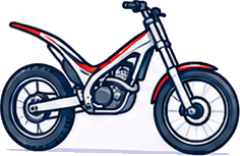
The most striking feature of a trial bike is the near-total absence of a conventional seat. Riders spend nearly all their time standing on the footpegs, using legs and core muscles to absorb impacts and shift balance dynamically.

  • Cockpit Geometry: Wide and slightly swept handlebars provide vast leverage for quick steering corrections at zero speed.
  • Weight Distribution: The engine block and minuscule fuel reservoir sit low in the perimeter frame to keep the center of mass close to the ground.
  • Supple Suspension: Tuned specifically for low-speed compression and rapid rebound, helping riders hop the front or rear wheel onto high ledges.

Ideal Rider Profile and Purpose

Trial bikes attract riders who appreciate mechanical precision, balance training, and problem-solving over sheer velocity. Hard enduro competitors and circuit racers frequently practice on trial machines to refine their clutch and throttle modulation. They are also popular with recreational trail enthusiasts who enjoy navigating technical woodland sections, steep riverbeds, and boulder fields with minimal environmental disturbance.

Key Characteristics Across the Category

  • Featherweight Construction: Modern production models typically weigh between 65 and 75 kg (143–165 lbs).
  • Instant Low-End Torque: Available in 125cc to 300cc two-stroke and four-stroke configurations, tuned for tractability at walking speeds rather than high-RPM horsepower.
  • Ultra-Soft Radial Tires: Run at extremely low pressures (often 4 to 5 PSI) to deform around rocks and generate maximum mechanical grip.
  • Compact Fuel Capacity: Most tanks hold around 2 to 3 liters, keeping the bike slim between the knees.

What to Look for When Choosing a Trial Bike

When inspecting a trial bike, frame integrity and engine bash-plate condition are critical, as rocks frequently strike the lower cradle. Inspect the spoke tension, rim trueness, and linkage bearings for lateral play. Pay extra attention to clutch smoothness; in trial riding, the hydraulic clutch acts as a primary tool for metering power delivery over obstacles.

Who Should Look Elsewhere?

Trial motorcycles are not suitable for commuting, touring, or casual long-distance trail riding. With no usable seat, minimal fuel range, and closely spaced gear ratios designed for trials sections, they cannot function as conventional transportation. If you want to sit down and cover dozens of miles of open trail, a dual-sport or enduro bike is the proper choice.

Trial Motorcycle Models

346 Trial motorcycles listed

CSR Trial 2008
  • Engine
    Single cylinder four-stroke
  • Power
    —
  • Displacement
    150 cc
  • Bore/Stroke
    —
CSR Trial 2008
  • Engine
    Single cylinder two-stroke
  • Power
    —
  • Displacement
    125 cc
  • Bore/Stroke
    —
Clipic Trial 2008
  • Engine
    Single cylinder four-stroke
  • Power
    —
  • Displacement
    125 cc
  • Bore/Stroke
    —
CCM Trial 2008
  • Engine
    Single cylinder four-stroke
  • Power
    40.0 hp (29.4 kW)
  • Displacement
    443 cc
  • Bore/Stroke
    95.0mm / 62.5mm
Beta Trial 2008
  • Engine
    Single cylinder four-stroke
  • Power
    —
  • Displacement
    250 cc
  • Bore/Stroke
    77.0mm / 53.6mm
Beta Trial 2008
  • Engine
    Single cylinder two-stroke
  • Power
    —
  • Displacement
    275 cc
  • Bore/Stroke
    76.0mm / 60.5mm
Beta Trial 2008
  • Engine
    Single cylinder two-stroke
  • Power
    —
  • Displacement
    250 cc
  • Bore/Stroke
    72.5mm / 60.5mm
Beta Trial 2008
  • Engine
    Single cylinder two-stroke
  • Power
    —
  • Displacement
    195 cc
  • Bore/Stroke
    64.0mm / 64.0mm
Beta Trial 2008
  • Engine
    Single cylinder two-stroke
  • Power
    —
  • Displacement
    124 cc
  • Bore/Stroke
    54.0mm / 54.0mm
Beta Trial 2008
  • Engine
    Single cylinder two-stroke
  • Power
    —
  • Displacement
    80 cc
  • Bore/Stroke
    48.0mm / 44.0mm
Beta Trial 2008
  • Engine
    Single cylinder two-stroke
  • Power
    —
  • Displacement
    50 cc
  • Bore/Stroke
    39.5mm / 40.8mm
2007 Sherco Trial 2.9 Motorcycle Sherco Trial 2007
  • Engine
    Single cylinder two-stroke
  • Power
    —
  • Displacement
    272 cc
  • Bore/Stroke
    76.0mm / 60.0mm
Sherco Trial 2007
  • Engine
    Single cylinder two-stroke
  • Power
    —
  • Displacement
    250 cc
  • Bore/Stroke
    72.8mm / 60.0mm
Sherco Trial 2007
  • Engine
    Single cylinder two-stroke
  • Power
    —
  • Displacement
    125 cc
  • Bore/Stroke
    56.0mm / 50.6mm
Sherco Trial 2007
  • Engine
    Single cylinder two-stroke
  • Power
    —
  • Displacement
    79 cc
  • Bore/Stroke
    44.4mm / 50.6mm
Jinlun Trial 2007
  • Engine
    Single cylinder four-stroke
  • Power
    8.0 hp (5.9 kW)
  • Displacement
    124 cc
  • Bore/Stroke
    56.5mm / 49.5mm
GAS GAS Trial 2007
  • Engine
    Single cylinder two-stroke
  • Power
    —
  • Displacement
    49 cc
  • Bore/Stroke
    40.0mm / 39.3mm
Beta Trial 2007
  • Engine
    Single cylinder four-stroke
  • Power
    —
  • Displacement
    250 cc
  • Bore/Stroke
    77.0mm / 53.6mm
Tank Sports Trial 2006
  • Engine
    Single cylinder four-stroke
  • Power
    19.0 hp (14.0 kW)
  • Displacement
    249 cc
  • Bore/Stroke
    —
Tank Sports Trial 2006
  • Engine
    Single cylinder four-stroke
  • Power
    16.6 hp (12.2 kW)
  • Displacement
    200 cc
  • Bore/Stroke
    —
Tank Sports Trial 2006
  • Engine
    Single cylinder four-stroke
  • Power
    16.6 hp (12.2 kW)
  • Displacement
    200 cc
  • Bore/Stroke
    —
Tank Sports Trial 2006
  • Engine
    Single cylinder four-stroke
  • Power
    7.2 hp (5.3 kW)
  • Displacement
    110 cc
  • Bore/Stroke
    —
2006 Sherco 3.2 Motorcycle Sherco Trial 2006
  • Engine
    Single cylinder four-stroke
  • Power
    —
  • Displacement
    317 cc
  • Bore/Stroke
    82.0mm / 60.0mm
Sherco Trial 2006
  • Engine
    Single cylinder two-stroke
  • Power
    —
  • Displacement
    162 cc
  • Bore/Stroke
    64.0mm / 50.6mm
Sherco Trial 2006
  • Engine
    Single cylinder two-stroke
  • Power
    —
  • Displacement
    125 cc
  • Bore/Stroke
    56.0mm / 50.6mm
GAS GAS Trial 2006
  • Engine
    Single cylinder four-stroke
  • Power
    —
  • Displacement
    398 cc
  • Bore/Stroke
    —
GAS GAS Trial 2006
  • Engine
    Single cylinder two-stroke
  • Power
    —
  • Displacement
    272 cc
  • Bore/Stroke
    76.0mm / 60.0mm
Sherco Trial 2005
  • Engine
    Single cylinder two-stroke
  • Power
    —
  • Displacement
    49 cc
  • Bore/Stroke
    40.0mm / 39.3mm
Linhai Trial 2005
  • Engine
    Single cylinder four-stroke
  • Power
    18.5 hp (13.6 kW)
  • Displacement
    197 cc
  • Bore/Stroke
    —
Linhai Trial 2005
  • Engine
    Single cylinder four-stroke
  • Power
    12.7 hp (9.4 kW)
  • Displacement
    149 cc
  • Bore/Stroke
    56.0mm / 49.5mm
## What is a Trial Motorcycle and How Did It Evolve? Trial riding is a distinct branch of motorcycling where the goal is not to finish first, but to conquer extreme natural and artificial terrain without putting a foot down. Originating in the early 20th century in the UK as reliability trials across rough farmland, the sport evolved into a specialized test of acrobatics, balance, and fine machine control. Modern trial motorcycles have eliminated all unnecessary bodywork, resulting in purpose-built tools focused strictly on agility and obstacle clearance. ## Design, Ergonomics, and Body Mechanics The most striking feature of a trial bike is the near-total absence of a conventional seat. Riders spend nearly all their time standing on the footpegs, using legs and core muscles to absorb impacts and shift balance dynamically. - **Cockpit Geometry:** Wide and slightly swept handlebars provide vast leverage for quick steering corrections at zero speed. - **Weight Distribution:** The engine block and minuscule fuel reservoir sit low in the perimeter frame to keep the center of mass close to the ground. - **Supple Suspension:** Tuned specifically for low-speed compression and rapid rebound, helping riders hop the front or rear wheel onto high ledges. ## Ideal Rider Profile and Purpose Trial bikes attract riders who appreciate mechanical precision, balance training, and problem-solving over sheer velocity. Hard enduro competitors and circuit racers frequently practice on trial machines to refine their clutch and throttle modulation. They are also popular with recreational trail enthusiasts who enjoy navigating technical woodland sections, steep riverbeds, and boulder fields with minimal environmental disturbance. ## Key Characteristics Across the Category - **Featherweight Construction:** Modern production models typically weigh between 65 and 75 kg (143–165 lbs). - **Instant Low-End Torque:** Available in 125cc to 300cc two-stroke and four-stroke configurations, tuned for tractability at walking speeds rather than high-RPM horsepower. - **Ultra-Soft Radial Tires:** Run at extremely low pressures (often 4 to 5 PSI) to deform around rocks and generate maximum mechanical grip. - **Compact Fuel Capacity:** Most tanks hold around 2 to 3 liters, keeping the bike slim between the knees. ## What to Look for When Choosing a Trial Bike When inspecting a trial bike, frame integrity and engine bash-plate condition are critical, as rocks frequently strike the lower cradle. Inspect the spoke tension, rim trueness, and linkage bearings for lateral play. Pay extra attention to clutch smoothness; in trial riding, the hydraulic clutch acts as a primary tool for metering power delivery over obstacles. ## Who Should Look Elsewhere? Trial motorcycles are not suitable for commuting, touring, or casual long-distance trail riding. With no usable seat, minimal fuel range, and closely spaced gear ratios designed for trials sections, they cannot function as conventional transportation. If you want to sit down and cover dozens of miles of open trail, a dual-sport or enduro bike is the proper choice.

Frequently Asked Questions

What is a trial motorcycle? ▾

A trial motorcycle is an ultra-lightweight, seatless off-road machine built to conquer severe obstacles like boulders and steep banks at low speeds through pure balance and precision.

Who should choose a trial bike? ▾

Riders wanting to master essential balance, clutch control, and body positioning, as well as off-road enthusiasts who prefer technical problem-solving over high-speed riding, should choose a trial bike.

What are the most notable features of trial motorcycles? ▾

Key features include an exceptionally low weight of around 70 kg, low-end torque delivery, absence of a conventional seat, and ultra-soft tires running at very low air pressure for maximum traction.

Is it suitable for beginners, and what should one keep in mind? ▾

It is one of the best tools for learning fundamental riding skills safely, but prospective owners must remember that it requires standing at all times and is entirely unsuited for general trail cruising or commuting.