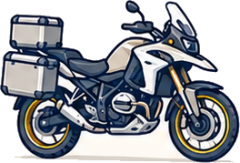
Adventure Motorcycles
The adventure category originated from the desire to blend long-distance touring comfort with off-road durability. Inspired by grueling desert endurance rallies in the 1980s, manufacturers began engineering robust machines capable of crossing continents over mixed terrain. Today, these motorcycles have evolved into the ultimate multipurpose travel tools, offering highway refinement alongside the hardware needed to explore unpaved roads with ease.
Ergonomics and Design Language
Adventure bikes are immediately recognizable by their tall stance, upright profile, and purposeful aesthetics. The rider sits in an open, neutral position that minimizes fatigue over full-day journeys.
- Wide, High Handlebars: Provide superior leverage and control whether seated or standing on the footpegs.
- Generous Wind Protection: Large windscreens and fairings deflect wind and weather around the rider's torso.
- Long-Travel Suspension: Effortlessly absorbs potholes, gravel washboards, and rough backcountry tracks.
- Elevated Seat Height: Delivers an commanding view over surrounding traffic and natural terrain.
Rider Profile and Experience
This segment is tailored for travelers who refuse to turn around when the tarmac ends. They are favored by touring riders who travel with luggage and passengers, as well as commuters seeking high visibility and plush suspension. While smaller displacement adventure bikes serve advancing novices well, full-sized models reward riders who have established confidence managing heavier, taller machinery.
Shared Core Characteristics
Across different engine sizes and configurations, adventure bikes share fundamental technical features:
- High-Capacity Fuel Tanks: Engineered to provide substantial range, often exceeding 350 to 500 kilometers per fill.
- Rider-Focused Electronics: Multiple riding modes, lean-sensitive ABS, and traction control systems tailored for both street and off-road.
- Luggage and Accessory Readiness: Subframes built to support hard panniers, top cases, and crash protection.
- Versatile Wheel Configurations: Typically equipped with 19-inch or 21-inch front wheels to handle irregularities smoothly.
Key Buying Considerations
When choosing an adventure machine, evaluate your realistic road-to-dirt ratio. Road-biased models with 19-inch alloy wheels offer sharper tarmac handling, while 21-inch spoked wheels are essential for technical off-road excursions. Pay close attention to seat height and wet weight; being able to place at least one foot firmly down when stopped on uneven surfaces is essential for confidence and safety.
Who Is It Not For?
Adventure motorcycles are not universally suitable. Their substantial seat height can be intimidating and physically challenging for shorter riders. With full luggage and fluids, large-displacement models can exceed 240 kilograms, making low-speed parking lot maneuvers demanding. Riders seeking a low center of gravity, aggressive track-focused dynamics, or minimalist city simplicity should look toward other categories.
Frequently Asked Questions
What is an Adventure motorcycle? ▾
Adventure motorcycles are versatile, dual-purpose machines built to handle long highway miles as well as unpaved trails. They feature tall suspension, comfortable upright ergonomics, and weather protection for all-distance riding.
Who should choose an Adventure motorcycle? ▾
Riders planning extended road trips, carrying luggage or a passenger, and those who want the freedom to explore gravel and dirt routes should look at this category. Commuters valuing upright comfort and commanding road presence also benefit.
What are the key features of Adventure bikes? ▾
Large fuel tanks for extended range, long-travel suspension that absorbs rough surfaces, robust luggage integration, and specialized ride modes for both street and off-road conditions define this class.
Are they suitable for beginners, and what should new riders watch for? ▾
Smaller displacement adventure models work well for beginners, but full-sized machines pose challenges due to tall seat heights and wet weights often exceeding 220 kg. Novices must ensure they can plant their feet down securely when stopped.