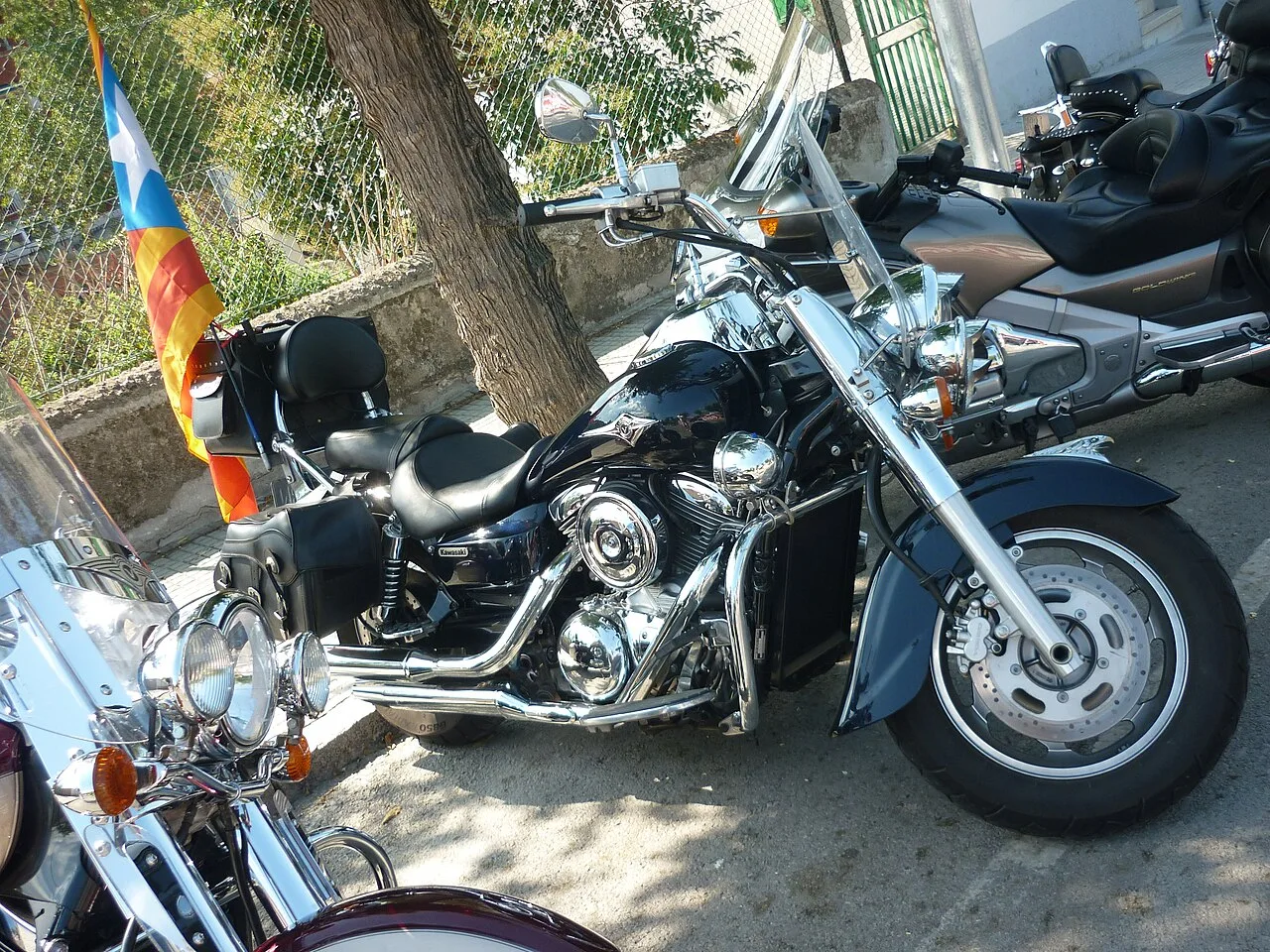
2005 Kawasaki Vulcan 1600 Classic



General features
With the sleek lines of a low “stretched” chassis and muscled-out V-twin engine, the Kawasaki Vulcan® 1600 Classic cruiser makes weekend rides into the countryside too inviting to resist.
Kawasaki Vulcan 1600 Classic History
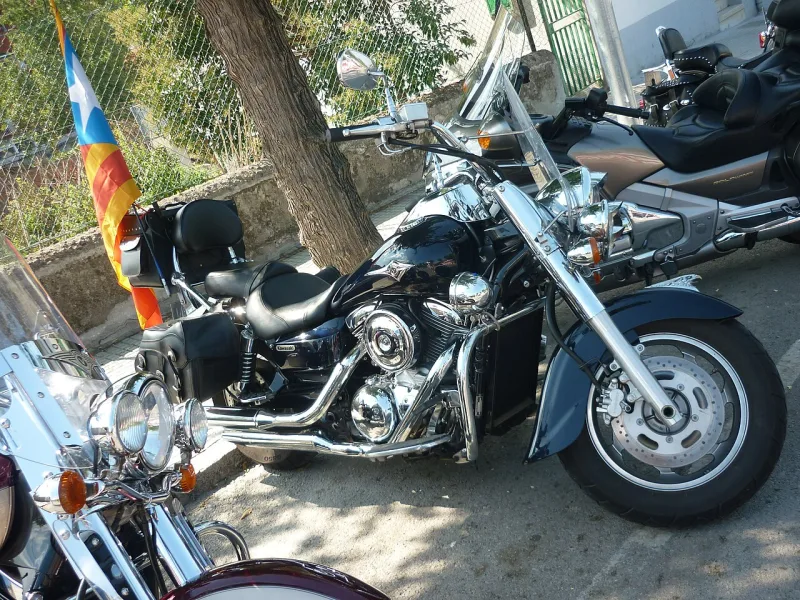
Kawasaki Vulcan 1600 Classic History & Generations Source: Wikipedia
Kawasaki launched, worldwide, the Vulcan VN700A, its first cruiser powered by its first V-twin engine. The VN700A has a shaft drive.
The tariff was lifted so the engine capacity was increased to 749 cc. Apart from paint schemes the Vulcan remained largely unchanged throughout its 22-year production run with only minor adjustments to components. As an entry-level cruiser. For a first series, the Vulcan 400 featured a 398 cc liquid-cooled twin engine, and was fitted with a belt drive and six-speed transmission.
And was immediately seen as a shot across the bow of other big bore motorcycles of the time, notably the Honda Gold Wing (1200cc) and the Harley Davidson Electra Glide (1340cc). The 88 was a reference to the nominal displacement (in cubic inches) of the liquid-cooled V-twin engine, at 1,470 cc (89.7… Through 1999. It was immediately dubbed 'The King of the Cruisers' by at least one motorcycle magazine A four-speed transmission was blended with the "large for its time motor" and offered consumers a big-bore metric cruiser that was comfortable and relatively light-weight at just over 600 lb (270 k…
Was the successor to the Kawasaki 454 LTD. The EN500A was fitted with a parallel twin 498 cc engine nearly identical to the Kawasaki Ninja 500R.
And the first of Kawasaki's modern cruiser style, featured a softail design, bobbed rear fender and a 21-inch front wheel. The VN800B (Classic), introduced
Had a 1,470 cc (90 cu in) liquid-cooled SOHC 50° V-twin engine with a single-pin crankshaft and a 5 speed transmission. Compared to the Vulcan 88 (which had been renamed to the Vulcan 1500 by that time), it had a lower 27.6-inch (700 mm) seat height, wide handlebar, and forward-mounted floorboards. Had a retro styling that featured full fenders and 16-inch wheels on both front and rear.
And ceased production
And lasted 2 years, before giving way to the 1600 Meanstreak. This performance version of the 1500 had the same basic engine as the 1500FI, but sported several upgrades including new camshafts, larger valves, larger fuel injection throttle bodies, new high compression pistons, and re-designed combus…
. It is notable for its large Indian-style fenders, wide solo seat, wide handlebars and fringe in several places.
With the introduction of the VN900. The VN800A, introduced
With an Ergo-Fit system designed for better custom comfort adjustability for different rider sizes: A choice of three foot peg positions, three seats and two handlebars are available to choose from, at time of purchase. The engine is a 649cc parallel twin derived from the Ninja 650.
History text adapted from Wikipedia under CC BY-SA.


Kawasaki Vulcan 1600 Classic Technical specs
Q&A
User questions & answers (forum) coming soon.
Comments
No comments yet. Be the first!
Gallery
Downloadable wallpapers (desktop & mobile) coming soon.