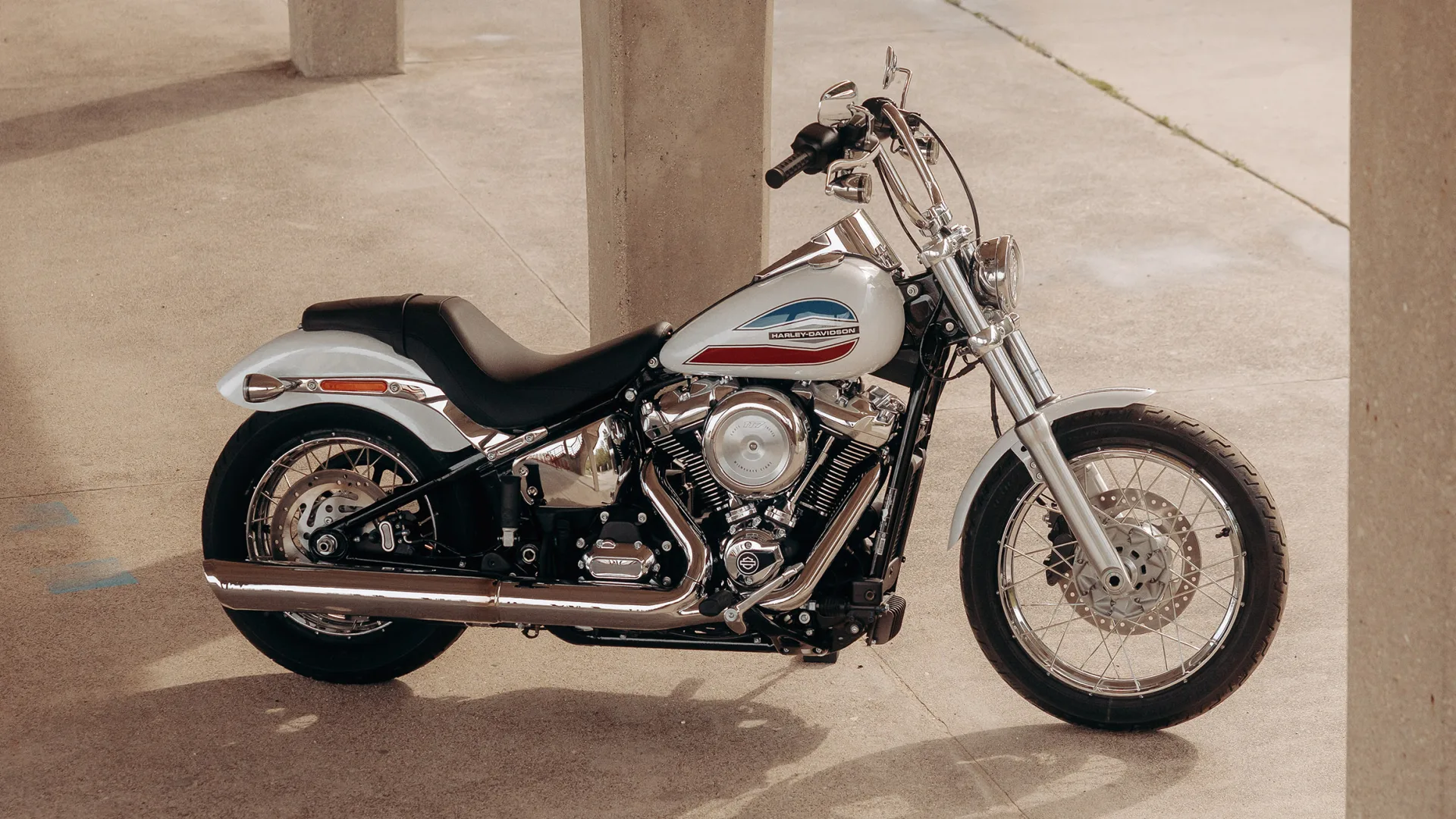
Harley-Davidson Super Glide


Harley-Davidson Super Glide History
Harley-Davidson Super Glide History & Generations Source: Wikipedia
The FX was joined by the FXE, a version of the Super Glide with an electric starter. Both versions also got an exclusive one-piece tank instead of the Fat Bob tank used by the FL.
The FXS Low Rider was introduced. The Low Rider had alloy wheels front and rear, two disc brakes on the front wheel, extended forks with a 32° rake, and a 26" seat height.
. In that year, the FXEF Fat Bob was introduced.
And sold alongside the existing FX models. The FXR was the base model with solid black paint and laced wheels.
The Low Rider was converted from chain drive to belt drive and given the designation FXSB, at which point the FXB was discontinued. In the same year, the FXDG Disc Glide was introduced. A Super Glide variant with a fairing and saddlebags. Upon the discontinuation of the corresponding FX-based models, the FXR Super Glide II became the FXR Super Glide and the FXRS Low Glide became the FXRS Low Rider.
With the FXEF Fat Bob becoming the base model. The 1985 FXEF was the first and last FXEF to have the Evo motor along with being the last year for the 4sp and chain drive.
All FX-based bikes except the Wide Glide were supplanted by FXR-based bikes. The Wide Glide was discontinued the following year as the new line of Softail models provides chopper-like looks.
To 2018 were based on the Dyna Glide chassis which has a wider variety of front ends and trim levels, and for a time filled the intermediate niche between the smallest and largest Harley-Davidson models; the Dyna platform has since been discontinued With a limited-production FXDB Sturgis model. The engine mounting system was changed from three rubber mounts to two, resulting in poorer vibration control, but speedier production on the assembly line.
By the limited-edition FXDB Daytona. Also introduced Was the FXDC Dyna Glide Custom. Apart from the paint scheme, the Dyna Glide Custom was virtually identical to the Daytona.
The faired and bagged FXRT Sport Glide was discontinued and the FXRS Low Rider was displaced by the FXDL Dyna Low Rider, although the FXR, FXLR, FXRS-Conv Convertible and the FXRS-SP Low Rider Sport continued to be sold. The FXDWG Dyna Wide Glide was introduced in the same year.
And the Low Rider was discontinued after the 2009 model year. Between the 1991 introduction of the Dyna chassis and the end of the 1994 model year, all Dyna models had a 32° rake.
The FXD Dyna Super Glide and the FXDS-Conv Dyna Glide Convertible were introduced. These Dynas had a 28° rake and replaced the FXR Super Glide and the FXLR Low Rider Custom, which were the last FXR models in regular production.
. The first blacked out Dyna with dual front disc brakes, tach/speedometer (the iconic mickey mouse ears) at the handlebars and higher rear end.
It got fully adjustable rear and front suspension. The FXDX-T Super Glide T-Sport, with a detachable fork mounted fairing and improved detachable saddlebags, replaced the FXDS-Conv Dyna Convertible
And was discontinued
. The FXDC returned to the line
As the Super Glide Custom.
A new Dyna chassis was introduced along with a new six-speed transmission. In the same year new models were the FXDBI Street Bob (a minimal, single seat Dyna Glide motorcycle available in the new 'denim' (matte) black color) and the limited edition FXDI35 35th Anniversary Super Glide (colored to res…
The Twin Cam 88 engine was replaced by the fuel-injected 1584 cc Twin Cam 96 engine across the entire Harley-Davidson Big Twin lineup, including the FXD series. The 'I' model designator was dropped for all models, since all Big Twins from then on had fuel injection.
. In the same year, the FXDWG Wide Glide was sold as a limited edition 105th Anniversary model before being retired, re-emerging
With a different (bobber) rear treatment. 2010 also saw the discontinuation of the FXD base model (replaced by the FXDB) and the loss of the FXDL Low Rider.
In favor of the new Softail frame, with some models from the Dyna nameplate being carried over to the Softail line. Having been replaced by a completely-redesigned Softail chassis. Some of the existing models previously released by the company under the Dyna nameplate have since been carried over to the new Softail line.
History text adapted from Wikipedia under CC BY-SA.
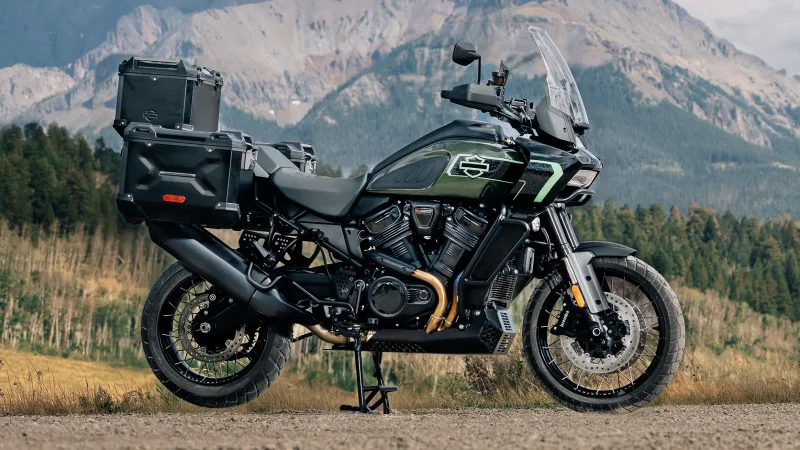


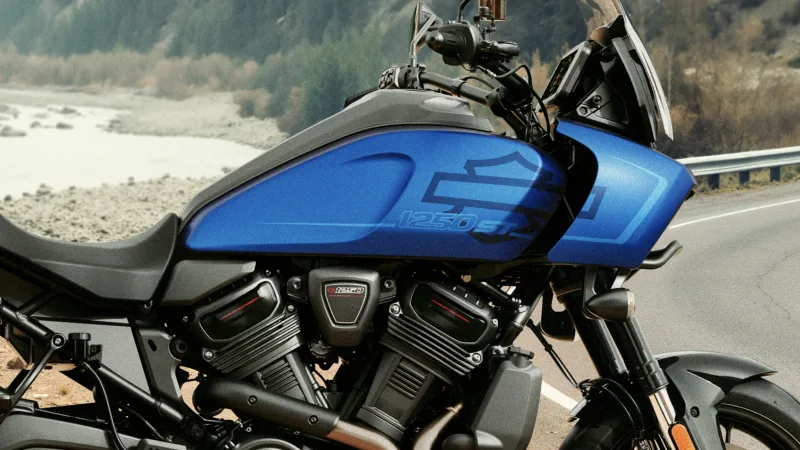
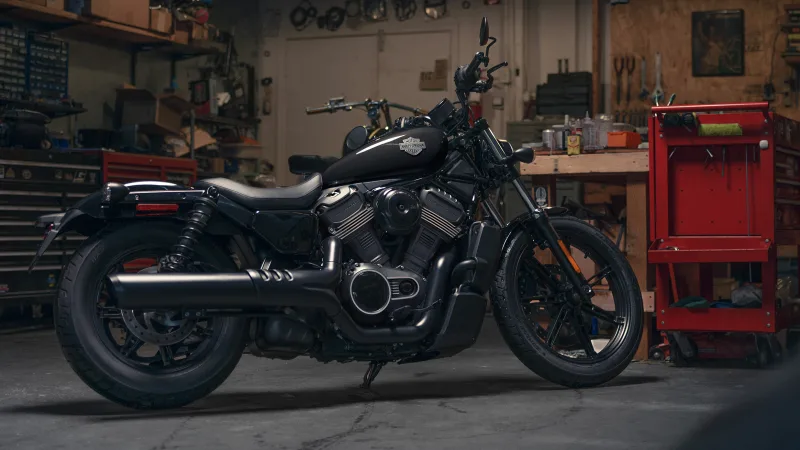
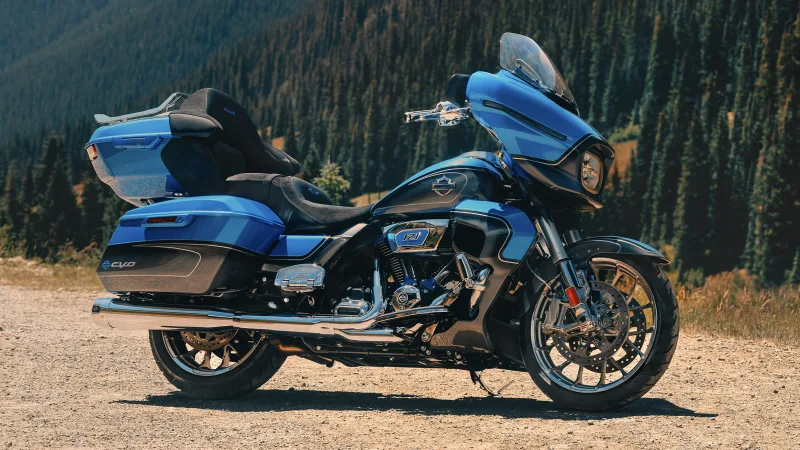
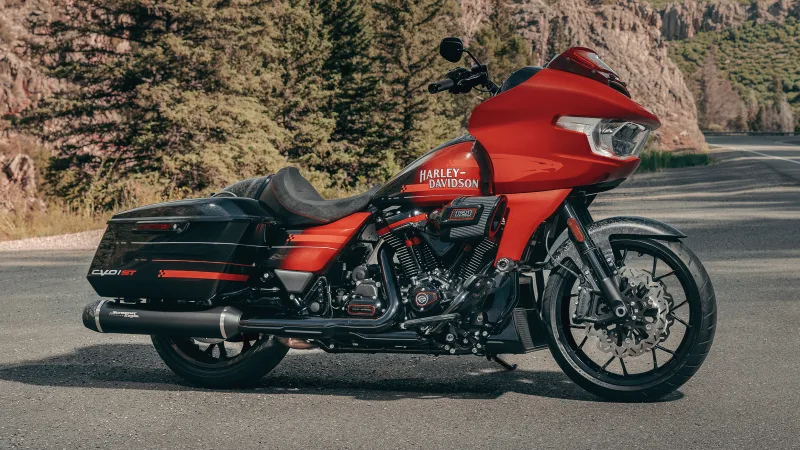
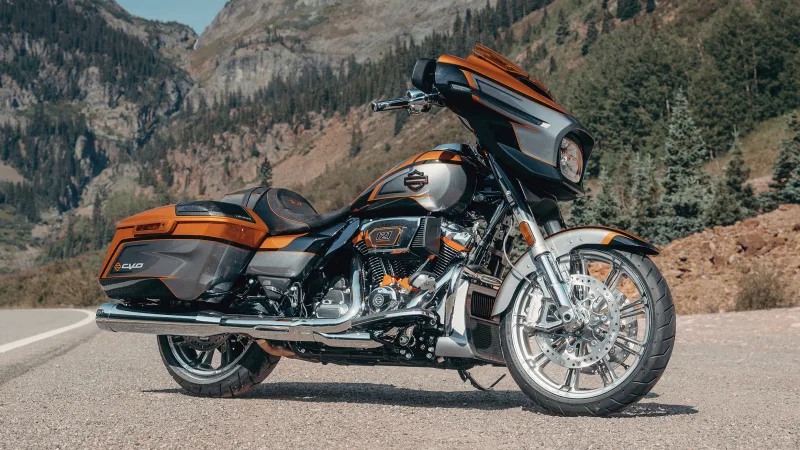
Harley-Davidson Super Glide Technical specs
Q&A
User questions & answers (forum) coming soon.
Comments
No comments yet. Be the first!
Gallery