Ducati Hypermotard 939


General features
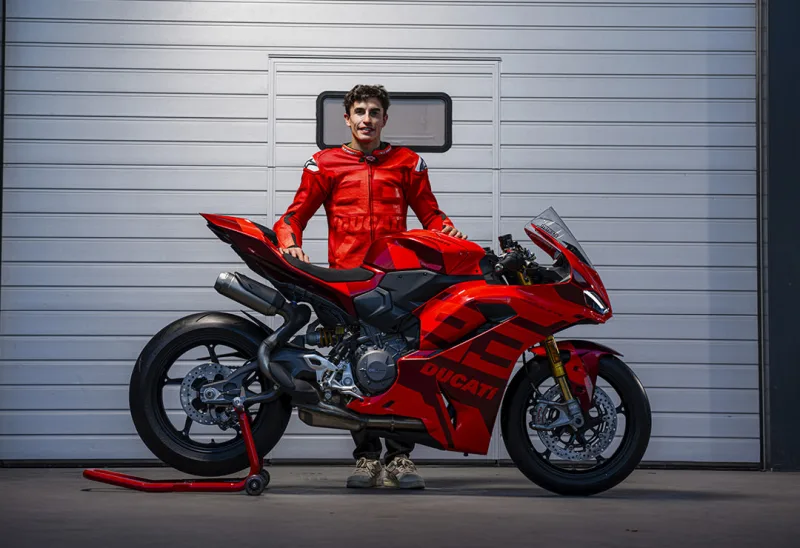
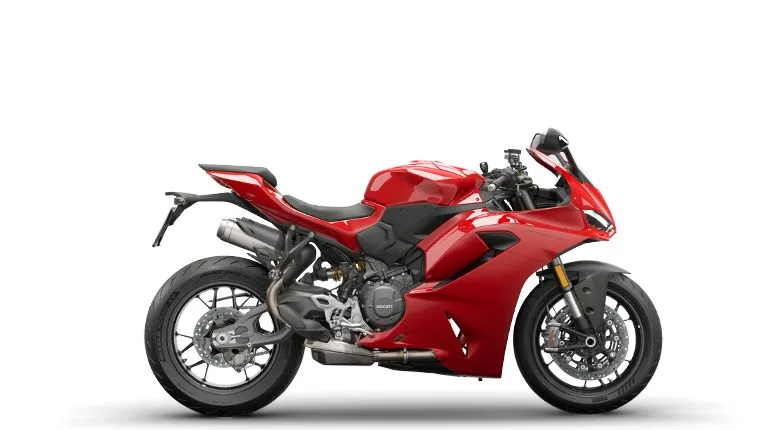
There are no limits to fun. A bike that transforms every moment into a riding experience of pure enjoyment.
Ducati Hypermotard 939 History
- Power 110.0 HP
- Displacement 939 cc
- Seat height 870.0 mm
- Power 113.0 HP
- Displacement 939 cc
- Seat height 870.0 mm
- Power 113.0 HP
- Displacement 939 cc
- Seat height 870.0 mm
Ducati Hypermotard 939 History & Generations Source: Wikipedia
Two versions of the Super Sport were made available based on the 864 cc "square-case" 90-degree twin cylinder motor; the full 864 cc version coined the 900 and a sleeved down 750. 250 examples of each were produced but the 750 and 900 are virtually identical.
That the Isle of Man TT Formula 1 race was won by a 900 Super Sport, ridden by former World Champion Mike Hailwood in a popular comeback race.
The Super Sports were painted black with gold accents to appeal to the British market. Cast Campagnolo wheels replaced the Borrani alloy rims and a Mike Hailwood Replica was made available in very limited numbers painted in lavish green and red schemes.
The Super Sport was replaced, mostly in name only, by the S2. Announced
The Ducati Supersport used a Pantah based 904 cc air-cooled 90° V-twin, two-valve "Desmodue" engine with crankcases derived from the 851 motor. It was mounted in a tubular trellis frame. To 1991, the model was called a 900 Supersport, and had a full fairing. The 1989 Supersport received a revised air/oil cooled motor from the 906cc Ducati Paso incorporating many changes to the Pantah motor, including a six-speed gear box.
To 1990 the motorcycle was fitted with a Marzocchi rear suspension, then first changed to Showa, and then to better quality Marzocchi damping Through 1999 for the Japanese and Italian markets. The 350/400 SS models were produced to meet regulations under the prevailing driving license schemes in Japan (400 cc) and Italy (350 cc), where there were limits on maximum displacement allowed for probationary motorcyclists.
. Marzocchi M1BB front forks were used until 1990, when they were replaced by Showa upside down units.
To 1998, the model was called 900 SS or 750 SS, and was available with a full (SS) or half fairing (SS/CR). 1992 saw the addition to the SS/SL (Superlight).
As a midrange competitor for a growing market, and to provide a cheap way to spread the Ducati range. Visually, they are only slightly different from the other SS models. To further differentiate the 900 from smaller Supersports additional models were released in addition the Superlight. The 900 SS/SP (Sport Production) was offered to the North American market only.
As Supersport sales were declining due to the popularity of the Ducati Monster and Ducati Superbike lines, Ducati attempted to keep the model alive with a few final changes. Yellow was added as a color option, an additional air intake was added as well as new, bolder graphics; namely the "Ducati" em…
Only 200 red and 200 yellow SS/CRs were imported to the United States. They featured the last of the Cagiva graphics and elephant but had 1998 spec. motors with new pistons, cylinders and lower mounted oil cooler. But featured the new graphics, came only in silver with black wheels, had the single seat and upswept exhausts of the Superlight and represented the last carburated Supersport.
The Supersport had a major facelift. The fairing was redesigned after the Ducati Supermono and fuel injection introduced.
And 2002, only in matte black, with a half fairing, and with a five-speed transmission rather than the six-speed unit on the Supersports.
Ducati replaced the 750 and 900 with three new variations: 620 cc, 800 cc and 1000 cc. Only the 620 was offered with half fairing.
. The Supersport 1000 DS had a 992 cc, air-cooled 90° V-twin engine with twin spark ignition, which Ducati described as "the most advanced air-cooled Desmo engine ever to be built by Ducati." The front suspension had fully adjustable 43 mm Showa forks, with an Ohlins single shock (also fully adjusta…
History text adapted from Wikipedia under CC BY-SA.


Ducati Hypermotard 939 Technical specs
Ducati Hypermotard 939 market reference value
Reference values from the monthly insurance value list published by the Insurance Association of Türkiye. New vehicles use the authorised distributor’s non-campaign list price; used ones use market averages.
Values are nominal Turkish lira; much of the rise reflects inflation. Switch to dollars or euros to see the real trend.
Values from the August 2026 list. All model years are valued on the same date, so this curve is free of inflation.
Source: Insurance Association of Türkiye, Kasko Değer Listesi, August 2026. These are reference values for insurers and carry no mileage, damage or condition breakdown.
Q&A
User questions & answers (forum) coming soon.
Comments
No comments yet. Be the first!
Gallery
Downloadable wallpapers (desktop & mobile) coming soon.