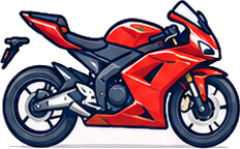
Sport

Sport Motorcycles

The sport motorcycle category originated directly from competitive road racing, where engineers stripped unnecessary weight and optimized aerodynamics to maximize speed and cornering performance. Over decades, this philosophy transitioned to production street models featuring aluminum twin-spar frames, full fairings, and high-rpm engine configurations. The fundamental concept is clear: minimize aerodynamic drag, center the mass low and forward, and provide the rider with uncompromised chassis feedback for precise vehicle placement.

Design, Ergonomics, and Riding Posture

Form strictly follows function in sport bike architecture. Key ergonomic traits include:

  • Clip-on Handlebars: Mounted low on the fork tubes, forcing the torso down toward the fuel tank to streamline the rider's profile.
  • Rearset Footpegs: Positioned higher and further back than standard street bikes, offering substantial ground clearance at steep lean angles.
  • Wind-Tunnel Fairings: Full body panels smooth air over and around the machine, reducing turbulence at higher velocities.

While this posture stabilizes the motorcycle under acceleration and cornering, it transfers significant weight to the rider's wrists, lower back, and core, making low-speed urban commuting physically demanding.

Rider Profile and Target Audience

Sport bikes appeal to riders who appreciate technical riding dynamics, track-day participation, and precise cornering geometry. The category spans from lightweight entry-level options with manageable power curves to high-displacement machines that demand seasoned throttle precision and body positioning. Commuters seeking straight-line comfort generally look elsewhere; sport bike riders value responsiveness, braking sharpness, and feedback over relaxed utility.

Core Characteristics of the Category

  • Stiff Chassis Design: Lightweight aluminum or trellis frames designed to withstand intense cornering loads without flexing.
  • Firm Suspension Tuning: Damping and spring rates prioritize chassis composure during aggressive braking and rapid direction changes rather than absorbing road imperfections.
  • High-Performance Braking: Large dual front discs with radial calipers provide progressive feel and immense stopping force.
  • Sticky, Wide Tires: Optimized contact patches deliver reliable traction at high lean angles.

What to Look for When Choosing a Sport Bike

Evaluate ergonomics carefully before deciding on a model. Clip-on height and seat-to-peg distances vary significantly across the segment; some models offer moderate ergonomics suitable for mixed street use, while others are track-focused and uncompromising. Engine characteristics also matter: parallel-twins often provide accessible low-end torque, whereas multi-cylinder layouts concentrate power in higher rev bands. When evaluating pre-owned models, check fork seals, steering head bearings, brake wear, and inspect under fairings for signs of frame stress.

Who Should Consider Other Categories?

A sport bike is not a universal solution. It is unsuited for riders who:

  • Frequently carry a passenger, as pillion seats are minimal and lack support,
  • Intend to cover long touring distances requiring substantial luggage mounting,
  • Ride frequently on poorly paved, broken, or gravel roads where stiff suspension and minimal ground clearance become problematic,
  • Seek an upright, relaxed seating posture for slow-moving commuter traffic.

Sport Motorcycle Models

1,857 Sport motorcycles listed

A2 Lifan Sport 2024
  • Engine
  • Power
    17.0 hp (12.5 kW)
  • Displacement
    198 cc
  • Bore/Stroke
A2 Lifan Sport 2024
  • Engine
  • Power
    17.0 hp (12.5 kW)
  • Displacement
    198 cc
  • Bore/Stroke
2024 Keeway X-Light 125 Motorcycle A1 Keeway Sport 2024
  • Engine
  • Power
    11.0 hp (8.1 kW)
  • Displacement
    125 cc
  • Bore/Stroke
A2 Keeway Sport 2024
  • Engine
    Single cylinder four-stroke
  • Power
    12.9 hp (9.5 kW)
  • Displacement
    200 cc
  • Bore/Stroke
A2 Keeway Sport 2024
  • Engine
  • Power
    12.3 hp (9.1 kW)
  • Displacement
    149 cc
  • Bore/Stroke
A2 Keeway Sport 2024
  • Engine
    Single cylinder four-stroke
  • Power
    12.3 hp (9.1 kW)
  • Displacement
    149 cc
  • Bore/Stroke
A2 Keeway Sport 2024
  • Engine
  • Power
    12.3 hp (9.1 kW)
  • Displacement
    149 cc
  • Bore/Stroke
A1 Keeway Sport 2024
  • Engine
  • Power
    11.0 hp (8.1 kW)
  • Displacement
    125 cc
  • Bore/Stroke
Kawasaki Sport 2024
  • Engine
  • Power
  • Displacement
    451 cc
  • Bore/Stroke
A2 Kawasaki Sport 2024
  • Engine
  • Power
    33.1 hp (24.4 kW)
  • Displacement
    249 cc
  • Bore/Stroke
A Kawasaki Sport 2024
  • Engine
    In-line four four-stroke
  • Power
    131.0 hp (96.4 kW)
  • Displacement
    636 cc
  • Bore/Stroke
A Kawasaki Sport 2024
  • Engine
    In-line four four-stroke
  • Power
    75.1 hp (55.2 kW)
  • Displacement
    399 cc
  • Bore/Stroke
A Kawasaki Sport 2024
  • Engine
    In-line four four-stroke
  • Power
    207.0 hp (152.2 kW)
  • Displacement
    1,441 cc
  • Bore/Stroke
A Kawasaki Sport 2024
  • Engine
  • Power
    203.0 hp (149.3 kW)
  • Displacement
    998 cc
  • Bore/Stroke
A Kawasaki Sport 2024
  • Engine
    In-line four four-stroke
  • Power
    203.0 hp (149.3 kW)
  • Displacement
    998 cc
  • Bore/Stroke
A Kawasaki Sport 2024
  • Engine
    Twin four-stroke
  • Power
    68.5 hp (50.4 kW)
  • Displacement
    451 cc
  • Bore/Stroke
A Kawasaki Sport 2024
  • Engine
    Twin four-stroke
  • Power
    51.0 hp (37.5 kW)
  • Displacement
    451 cc
  • Bore/Stroke
A Kawasaki Sport 2024
  • Engine
    In-line four four-stroke
  • Power
    200.0 hp (147.1 kW)
  • Displacement
    1,043 cc
  • Bore/Stroke
A2 Honda Sport 2024
  • Engine
    Twin four-stroke
  • Power
    46.9 hp (34.5 kW)
  • Displacement
    471 cc
  • Bore/Stroke
Honda Sport 2024
  • Engine
    Single cylinder four-stroke
  • Power
  • Displacement
    124 cc
  • Bore/Stroke
2024 Honda CBR600RR ABS Motorcycle A Honda Sport 2024
  • Engine
  • Power
    118.0 hp (86.8 kW)
  • Displacement
    599 cc
  • Bore/Stroke
Honda Sport 2024
  • Engine
    In-line four four-stroke
  • Power
  • Displacement
    999 cc
  • Bore/Stroke
A2 Hero Sport 2024
  • Engine
  • Power
    13.4 hp (9.9 kW)
  • Displacement
    149 cc
  • Bore/Stroke
A2 Hero Sport 2024
  • Engine
    Single cylinder four-stroke
  • Power
    13.4 hp (9.9 kW)
  • Displacement
    149 cc
  • Bore/Stroke
A1 Genata Sport 2024
  • Engine
  • Power
    11.4 hp (8.4 kW)
  • Displacement
    125 cc
  • Bore/Stroke
A Energica Sport 2024
  • Engine
    Electric
  • Power
    107.0 hp (78.7 kW)
  • Displacement
  • Bore/Stroke
## What is a Sport Motorcycle and How Did It Evolve? The sport motorcycle category originated directly from competitive road racing, where engineers stripped unnecessary weight and optimized aerodynamics to maximize speed and cornering performance. Over decades, this philosophy transitioned to production street models featuring aluminum twin-spar frames, full fairings, and high-rpm engine configurations. The fundamental concept is clear: minimize aerodynamic drag, center the mass low and forward, and provide the rider with uncompromised chassis feedback for precise vehicle placement. ## Design, Ergonomics, and Riding Posture Form strictly follows function in sport bike architecture. Key ergonomic traits include: - **Clip-on Handlebars:** Mounted low on the fork tubes, forcing the torso down toward the fuel tank to streamline the rider's profile. - **Rearset Footpegs:** Positioned higher and further back than standard street bikes, offering substantial ground clearance at steep lean angles. - **Wind-Tunnel Fairings:** Full body panels smooth air over and around the machine, reducing turbulence at higher velocities. While this posture stabilizes the motorcycle under acceleration and cornering, it transfers significant weight to the rider's wrists, lower back, and core, making low-speed urban commuting physically demanding. ## Rider Profile and Target Audience Sport bikes appeal to riders who appreciate technical riding dynamics, track-day participation, and precise cornering geometry. The category spans from lightweight entry-level options with manageable power curves to high-displacement machines that demand seasoned throttle precision and body positioning. Commuters seeking straight-line comfort generally look elsewhere; sport bike riders value responsiveness, braking sharpness, and feedback over relaxed utility. ## Core Characteristics of the Category - **Stiff Chassis Design:** Lightweight aluminum or trellis frames designed to withstand intense cornering loads without flexing. - **Firm Suspension Tuning:** Damping and spring rates prioritize chassis composure during aggressive braking and rapid direction changes rather than absorbing road imperfections. - **High-Performance Braking:** Large dual front discs with radial calipers provide progressive feel and immense stopping force. - **Sticky, Wide Tires:** Optimized contact patches deliver reliable traction at high lean angles. ## What to Look for When Choosing a Sport Bike Evaluate ergonomics carefully before deciding on a model. Clip-on height and seat-to-peg distances vary significantly across the segment; some models offer moderate ergonomics suitable for mixed street use, while others are track-focused and uncompromising. Engine characteristics also matter: parallel-twins often provide accessible low-end torque, whereas multi-cylinder layouts concentrate power in higher rev bands. When evaluating pre-owned models, check fork seals, steering head bearings, brake wear, and inspect under fairings for signs of frame stress. ## Who Should Consider Other Categories? A sport bike is not a universal solution. It is unsuited for riders who: - Frequently carry a passenger, as pillion seats are minimal and lack support, - Intend to cover long touring distances requiring substantial luggage mounting, - Ride frequently on poorly paved, broken, or gravel roads where stiff suspension and minimal ground clearance become problematic, - Seek an upright, relaxed seating posture for slow-moving commuter traffic.

Frequently Asked Questions

What is the Sport category?

Sport motorcycles are performance-oriented machines featuring aerodynamic bodywork, clip-on handlebars, and track-derived chassis geometry. They are engineered to deliver sharp handling, stability at speed, and responsive braking.

Who should choose a Sport motorcycle?

They are ideal for riders who prioritize cornering agility, precise chassis feedback, and occasional track-day use. They suit those who value an active, focused riding dynamic over long-distance comfort.

What are the key characteristics of sport bikes?

Key traits include full aerodynamic fairings, a forward-crouched seating posture, stiff suspension tuning, and high-performance braking systems. These features optimize control and agility while making low-speed riding more physically demanding.

Are they suitable for beginners / what should be considered?

Lightweight, lower-displacement models are beginner-friendly, while high-output sport bikes require experienced throttle and brake management. Novices should choose manageable engine power and expect an adaptation period for the wrist-heavy riding posture.