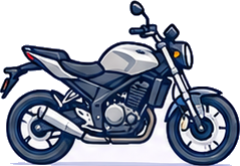
Naked bike

Naked bike Motorcycles

A naked bike is a motorcycle that eliminates full body fairings and oversized windscreens, leaving the engine, frame, and internal components fully visible. The origins of this category trace back to the 1970s and 1980s street scene. When riders crashed their fully faired sportbikes, high replacement costs prompted them to remove the broken plastic panels, install standard handlebars, and continue riding—a movement known as the "Streetfighter" style. Recognizing this growing grassroots preference, motorcycle manufacturers began designing purpose-built naked models directly from the factory in the 1990s. Today, ranging from lightweight 125 cc commuters to high-capacity open-class machines, naked bikes represent one of the most broadly adopted segments in the global motorcycling landscape.

Design Architecture and Ergonomics

The central visual identity of a naked motorcycle is its purposeful minimalism. Rather than hiding components behind plastic cowlings, styling centers around exposed tubular or cast frames, sculptured fuel tanks, and compact headlight arrangements. Ergonomically, naked bikes provide a well-balanced layout:

  • Upright Handlebars: Wide, one-piece handlebars deliver broad leverage, enabling quick, effortless countersteering without forcing the rider to reach down.
  • Neutral Seating Triangle: Footpegs are located centrally, allowing knees to rest comfortably against the tank while keeping the torso upright or with a mild forward cant, minimizing wrist strain.
  • Accessible Seat Heights: Slim midsections make reaching the ground straightforward during frequent stops in urban environments.

Who Should Choose a Naked Bike?

Naked motorcycles fit a broad spectrum of real-world riding styles:

  1. Urban Commuters: The combination of an upright field of vision, tight turning radius, and responsive mid-range throttle response makes navigating heavy traffic simple.
  2. Progressing Intermediate Riders: With low overall mass and direct feedback through the chassis, riders can sharpen their cornering and braking skills with confidence.
  3. Weekend Enthusiasts: Riders who focus on dynamic canyon roads, twisty mountain passes, or secondary backroads will appreciate the immediate throttle response and nimble chassis.

Common Characteristics of the Category

  • Weight Reduction: Shedding fairing brackets and panels reduces dry weight, which sharpens corner turn-in and braking distances.
  • Mid-Range Engine Tuning: Rather than top-end track speed, naked engines are typically mapped to deliver rich torque across low and intermediate RPM ranges.
  • Direct Mechanical Accessibility: Routine maintenance such as fluid checks, spark plug changes, and chain adjustments require minimal disassembly.
  • Lower Repair Vulnerability: In the event of a low-speed tip-over, repair expenses remain relatively low since there is minimal painted bodywork to crack.

Key Considerations Before Buying

When evaluating a naked bike, consider the integration of modern electronic rider aids. Entry-level models benefit greatly from basic dual-channel ABS, whereas powerful multi-cylinder machines should ideally include selectable throttle modes, traction control, and a slipper clutch to manage engine braking. If occasional highway travel is planned, investigate whether aftermarket windscreen accessories and luggage mounting systems are readily available for that specific frame.

Who is It NOT Suitable For?

Naked bikes are not universally suitable for every riding mission. The total lack of wind protection means that sustaining highway speeds above 70 mph (110 km/h) creates significant wind blast on the rider's chest and helmet, leading to muscular fatigue over extended hours. Riders planning long-distance interstate touring, year-round commuting through harsh winter climates, or exploration beyond paved asphalt roads should instead explore dedicated touring, sport-touring, or adventure motorcycle categories.

Naked bike Motorcycle Models

1,314 Naked bike motorcycles listed

2026 Kawasaki Z900 Motorcycle A Kawasaki Naked bike 2026
  • Engine
  • Power
    123.7 hp (91.0 kW)
  • Displacement
    948 cc
  • Bore/Stroke
2026 Kawasaki Z H2 Motorcycle A Kawasaki Naked bike 2026
  • Engine
  • Power
    200.0 hp (147.1 kW)
  • Displacement
    998 cc
  • Bore/Stroke
2026 Kawasaki Z650 Motorcycle A Kawasaki Naked bike 2026
  • Engine
  • Power
    68.3 hp (50.2 kW)
  • Displacement
    649 cc
  • Bore/Stroke
2026 Kawasaki Z500 SE Motorcycle A2 Kawasaki Naked bike 2026
  • Engine
  • Power
    45.4 hp (33.4 kW)
  • Displacement
    451 cc
  • Bore/Stroke
2026 Suzuki GSX-S125 Motorcycle A1 Suzuki Naked bike 2026
  • Engine
  • Power
    14.8 hp (10.9 kW)
  • Displacement
    125 cc
  • Bore/Stroke
2026 Suzuki GSX-8S Motorcycle A Suzuki Naked bike 2026
  • Engine
  • Power
    81.8 hp (60.2 kW)
  • Displacement
    776 cc
  • Bore/Stroke
2026 Suzuki GSX-S950 Motorcycle A Suzuki Naked bike 2026
  • Engine
  • Power
    93.7 hp (68.9 kW)
  • Displacement
    999 cc
  • Bore/Stroke
2026 Yamaha MT-03 Motorcycle Yamaha Naked bike 2026
  • Engine
  • Power
  • Displacement
    321 cc
  • Bore/Stroke
2026 Yamaha MT-09 Motorcycle Yamaha Naked bike 2026
  • Engine
  • Power
  • Displacement
    890 cc
  • Bore/Stroke
2026 Yamaha MT-10 Motorcycle Yamaha Naked bike 2026
  • Engine
  • Power
  • Displacement
    998 cc
  • Bore/Stroke
2026 CFMOTO 800NK Motorcycle A CFMOTO Naked bike 2026
  • Engine
  • Power
    100.6 hp (74.0 kW)
  • Displacement
    799 cc
  • Bore/Stroke
2026 CFMOTO 675NK Motorcycle A CFMOTO Naked bike 2026
  • Engine
  • Power
    95.2 hp (70.0 kW)
  • Displacement
    675 cc
  • Bore/Stroke
2026 CFMOTO 450NK Motorcycle A CFMOTO Naked bike 2026
  • Engine
  • Power
    51.7 hp (38.0 kW)
  • Displacement
    450 cc
  • Bore/Stroke
2026 CFMOTO 300NK Motorcycle A2 CFMOTO Naked bike 2026
  • Engine
  • Power
    29.1 hp (21.4 kW)
  • Displacement
    292 cc
  • Bore/Stroke
2026 CFMOTO 250NK Motorcycle A2 CFMOTO Naked bike 2026
  • Engine
  • Power
    27.9 hp (20.5 kW)
  • Displacement
    249 cc
  • Bore/Stroke
2026 CFMOTO 125NK Motorcycle A1 CFMOTO Naked bike 2026
  • Engine
  • Power
    15.0 hp (11.0 kW)
  • Displacement
    124 cc
  • Bore/Stroke
2026 Honda CB125R Motorcycle A1 Honda Naked bike 2026
  • Engine
  • Power
    15.0 hp (11.0 kW)
  • Displacement
    125 cc
  • Bore/Stroke
2026 Honda CB500-HORNET Motorcycle A2 Honda Naked bike 2026
  • Engine
  • Power
    47.6 hp (35.0 kW)
  • Displacement
    471 cc
  • Bore/Stroke
2026 Honda CB650R Motorcycle A Honda Naked bike 2026
  • Engine
  • Power
    95.2 hp (70.0 kW)
  • Displacement
    649 cc
  • Bore/Stroke
2026 Honda CB750 Hornet Motorcycle A Honda Naked bike 2026
  • Engine
  • Power
    91.8 hp (67.5 kW)
  • Displacement
    755 cc
  • Bore/Stroke
2026 Honda CB1000-HORNET Motorcycle A Honda Naked bike 2026
  • Engine
  • Power
    157.2 hp (115.6 kW)
  • Displacement
    1,000 cc
  • Bore/Stroke
2025 Zero S Motorcycle A Zero Naked bike 2025
  • Engine
  • Power
    68.0 hp (50.0 kW)
  • Displacement
  • Bore/Stroke
A1 Yuki Naked bike 2025
  • Engine
  • Power
    12.7 hp (9.4 kW)
  • Displacement
    125 cc
  • Bore/Stroke
2025 Yamaha MT-10 SP Motorcycle A Yamaha Naked bike 2025
  • Engine
  • Power
    164.0 hp (120.6 kW)
  • Displacement
    998 cc
  • Bore/Stroke
2025 Yamaha MT-09 Y-AMT Motorcycle A Yamaha Naked bike 2025
  • Engine
  • Power
    119.0 hp (87.5 kW)
  • Displacement
    890 cc
  • Bore/Stroke
2025 Yamaha MT-09 SP Motorcycle A Yamaha Naked bike 2025
  • Engine
    In-line three four-stroke
  • Power
    119.0 hp (87.5 kW)
  • Displacement
    890 cc
  • Bore/Stroke
Yamaha Naked bike 2025
  • Engine
    Twin four-stroke
  • Power
  • Displacement
    655 cc
  • Bore/Stroke
2025 Yadea Kemper Motorcycle A2 Yadea Naked bike 2025
  • Engine
  • Power
    40.2 hp (29.6 kW)
  • Displacement
  • Bore/Stroke
A2 Yadea Naked bike 2025
  • Engine
    Electric
  • Power
    7.4 hp (5.4 kW)
  • Displacement
  • Bore/Stroke
A2 Voge Naked bike 2025
  • Engine
  • Power
    40.2 hp (29.6 kW)
  • Displacement
    322 cc
  • Bore/Stroke
## What is a Naked Bike and How Did It Emerge? A naked bike is a motorcycle that eliminates full body fairings and oversized windscreens, leaving the engine, frame, and internal components fully visible. The origins of this category trace back to the 1970s and 1980s street scene. When riders crashed their fully faired sportbikes, high replacement costs prompted them to remove the broken plastic panels, install standard handlebars, and continue riding—a movement known as the "Streetfighter" style. Recognizing this growing grassroots preference, motorcycle manufacturers began designing purpose-built naked models directly from the factory in the 1990s. Today, ranging from lightweight 125 cc commuters to high-capacity open-class machines, naked bikes represent one of the most broadly adopted segments in the global motorcycling landscape. ## Design Architecture and Ergonomics The central visual identity of a naked motorcycle is its purposeful minimalism. Rather than hiding components behind plastic cowlings, styling centers around exposed tubular or cast frames, sculptured fuel tanks, and compact headlight arrangements. Ergonomically, naked bikes provide a well-balanced layout: - **Upright Handlebars:** Wide, one-piece handlebars deliver broad leverage, enabling quick, effortless countersteering without forcing the rider to reach down. - **Neutral Seating Triangle:** Footpegs are located centrally, allowing knees to rest comfortably against the tank while keeping the torso upright or with a mild forward cant, minimizing wrist strain. - **Accessible Seat Heights:** Slim midsections make reaching the ground straightforward during frequent stops in urban environments. ## Who Should Choose a Naked Bike? Naked motorcycles fit a broad spectrum of real-world riding styles: 1. **Urban Commuters:** The combination of an upright field of vision, tight turning radius, and responsive mid-range throttle response makes navigating heavy traffic simple. 2. **Progressing Intermediate Riders:** With low overall mass and direct feedback through the chassis, riders can sharpen their cornering and braking skills with confidence. 3. **Weekend Enthusiasts:** Riders who focus on dynamic canyon roads, twisty mountain passes, or secondary backroads will appreciate the immediate throttle response and nimble chassis. ## Common Characteristics of the Category - **Weight Reduction:** Shedding fairing brackets and panels reduces dry weight, which sharpens corner turn-in and braking distances. - **Mid-Range Engine Tuning:** Rather than top-end track speed, naked engines are typically mapped to deliver rich torque across low and intermediate RPM ranges. - **Direct Mechanical Accessibility:** Routine maintenance such as fluid checks, spark plug changes, and chain adjustments require minimal disassembly. - **Lower Repair Vulnerability:** In the event of a low-speed tip-over, repair expenses remain relatively low since there is minimal painted bodywork to crack. ## Key Considerations Before Buying When evaluating a naked bike, consider the integration of modern electronic rider aids. Entry-level models benefit greatly from basic dual-channel ABS, whereas powerful multi-cylinder machines should ideally include selectable throttle modes, traction control, and a slipper clutch to manage engine braking. If occasional highway travel is planned, investigate whether aftermarket windscreen accessories and luggage mounting systems are readily available for that specific frame. ## Who is It NOT Suitable For? Naked bikes are not universally suitable for every riding mission. The total lack of wind protection means that sustaining highway speeds above 70 mph (110 km/h) creates significant wind blast on the rider's chest and helmet, leading to muscular fatigue over extended hours. Riders planning long-distance interstate touring, year-round commuting through harsh winter climates, or exploration beyond paved asphalt roads should instead explore dedicated touring, sport-touring, or adventure motorcycle categories.

Frequently Asked Questions

What is a Naked bike?

A naked bike is a minimalist motorcycle designed without full aerodynamic fairings or large windscreens, leaving the engine block and chassis visibly exposed.

Who should choose a Naked bike?

Riders seeking an upright and comfortable seating position for urban commuting, combined with an agile and responsive setup for spirited weekend rides on twisty roads.

What are the main characteristics of Naked bikes?

Key traits include light overall weight, wide upright handlebars, strong low-to-mid-range engine torque, and straightforward mechanical access for maintenance.

Are they suitable for beginners, and what should riders consider?

Low-to-medium displacement naked bikes are very beginner-friendly due to their natural balance; however, riders must account for significant wind fatigue at high highway speeds.