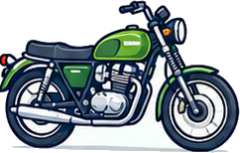
Classic

Classic Motorcycles

The classic motorcycle category reflects the fundamental design principles of mid-twentieth-century motorcycling. Drawing inspiration from roadsters of the 1950s through the 1970s, these machines strip away non-essential bodywork to showcase pure mechanical components. Modern manufacturers have embraced this lineage by pairing authentic styling cues with contemporary engineering, such as electronic fuel injection, disc brakes, and modern emissions controls. This balance gives riders the aesthetic charm of traditional motorcycles alongside modern day-to-day dependability.

Design Language and Riding Ergonomics

Simplicity defines the visual character of classic motorcycles. Tear-drop fuel tanks, analog instrumentation, single-piece bench seats, and fully exposed engines are universal staples across this segment. From an ergonomic perspective, classic bikes emphasize neutral balance:

  • Upright Posture: Handlebars and footpegs are arranged to keep the rider's spine upright and shoulders relaxed.
  • Accessible Seat Heights: Moderate seat heights allow riders of varying sizes to place both feet firmly on the ground at stops.
  • Clear Field of View: The upright stance provides excellent visibility in congested city traffic without straining the neck.

Rider Profile: Who is This Category For?

Classic motorcycles suit riders who value the ride itself over outright velocity or lap times. Daily commuters looking for a manageable machine, as well as riders who enjoy relaxed weekend country road outings, will appreciate this category. It serves both newer riders building confidence on an intuitive platform and experienced motorcyclists returning to straightforward, unpretentious machines after years on complex platforms.

Key Characteristics of the Classic Segment

While engine displacements and configurations vary, most classic bikes share clear traits:

  • Low-to-Mid-Range Usability: Engines are tuned to deliver torque early in the rev range, making stop-and-go riding smooth and reducing the need for constant downshifting.
  • Cooling Fin Styling: Engines often retain traditional cooling fins on the cylinder blocks, maintaining heritage aesthetics even when liquid cooling is present.
  • Simple Chassis Geometry: Conventional steel tube frames paired with dual rear shock absorbers deliver predictable handling.
  • Minimalist Cockpits: Clean handlebar layouts with circular mirrors and classic dial instrumentation keep distractions to a minimum.

Buying Considerations

When choosing a classic machine, differentiate between true vintage bikes and modern retro models. True historic models demand dedicated mechanical maintenance, sourcing of legacy parts, and routine manual tuning. Modern classics, by contrast, offer standard service intervals and electronic safety features like ABS. Buyers should also factor in the lack of weather protection and consider whether their riding involves prolonged highway travel.

Who Should Look Elsewhere?

Classic motorcycles are not built for every riding discipline. Riders planning frequent high-speed highway touring will find the absence of fairings and windshields fatiguing over long distances. Similarly, those seeking aggressive track performance, sharp cornering lean angles, or off-road adventure capabilities will find standard classic platforms ill-suited to their demands.

Classic Motorcycle Models

487 Classic motorcycles listed

Motobi Classic 2007
  • Engine
    Single cylinder four-stroke
  • Power
    —
  • Displacement
    249 cc
  • Bore/Stroke
    75.0mm / 57.0mm
Moto Guzzi Classic 2007
  • Engine
    V2 four-stroke
  • Power
    —
  • Displacement
    1,064 cc
  • Bore/Stroke
    91.4mm / 80.0mm
2007 Kymco Grand King 150 Motorcycle Kymco Classic 2007
  • Engine
    Single cylinder four-stroke
  • Power
    —
  • Displacement
    150 cc
  • Bore/Stroke
    —
Kymco Classic 2007
  • Engine
    Single cylinder four-stroke
  • Power
    —
  • Displacement
    124 cc
  • Bore/Stroke
    —
A2 Jawa Classic 2007
  • Engine
    Single cylinder two-stroke
  • Power
    11.8 hp (8.7 kW)
  • Displacement
    249 cc
  • Bore/Stroke
    —
2007 Hero Honda Super Splendor Motorcycle A1 Hero Classic 2007
  • Engine
    Single cylinder four-stroke
  • Power
    9.0 hp (6.6 kW)
  • Displacement
    125 cc
  • Bore/Stroke
    52.4mm / 57.8mm
2007 Hero Honda Splendor Motorcycle A1 Hero Classic 2007
  • Engine
    Single cylinder four-stroke
  • Power
    7.6 hp (5.6 kW)
  • Displacement
    97 cc
  • Bore/Stroke
    52.4mm / 57.8mm
A2 Classic 2007
  • Engine
    Single cylinder four-stroke
  • Power
    22.0 hp (16.2 kW)
  • Displacement
    499 cc
  • Bore/Stroke
    84.0mm / 90.0mm
2007 Enfield Thunderbird Motorcycle A2 Classic 2007
  • Engine
    Single cylinder four-stroke
  • Power
    18.0 hp (13.2 kW)
  • Displacement
    346 cc
  • Bore/Stroke
    70.0mm / 90.0mm
A2 Classic 2007
  • Engine
    Single cylinder four-stroke
  • Power
    22.0 hp (16.2 kW)
  • Displacement
    499 cc
  • Bore/Stroke
    —
A2 Classic 2007
  • Engine
    Single cylinder four-stroke
  • Power
    22.0 hp (16.2 kW)
  • Displacement
    499 cc
  • Bore/Stroke
    84.0mm / 90.0mm
A2 Classic 2007
  • Engine
    Single cylinder four-stroke
  • Power
    22.0 hp (16.2 kW)
  • Displacement
    499 cc
  • Bore/Stroke
    84.0mm / 90.0mm
A2 Classic 2007
  • Engine
    Single cylinder four-stroke
  • Power
    22.0 hp (16.2 kW)
  • Displacement
    499 cc
  • Bore/Stroke
    84.0mm / 90.0mm
A2 Classic 2007
  • Engine
    Single cylinder four-stroke
  • Power
    23.0 hp (16.9 kW)
  • Displacement
    499 cc
  • Bore/Stroke
    84.0mm / 90.0mm
A2 Classic 2007
  • Engine
    Single cylinder four-stroke
  • Power
    22.0 hp (16.2 kW)
  • Displacement
    499 cc
  • Bore/Stroke
    84.0mm / 90.0mm
A2 Classic 2007
  • Engine
    Single cylinder four-stroke
  • Power
    22.0 hp (16.2 kW)
  • Displacement
    499 cc
  • Bore/Stroke
    84.0mm / 90.0mm
2007 Enfield Bullet 500 Classic Motorcycle A2 Classic 2007
  • Engine
    Single cylinder four-stroke
  • Power
    22.0 hp (16.2 kW)
  • Displacement
    499 cc
  • Bore/Stroke
    84.0mm / 90.0mm
2007 Ducati Sport 1000 Monoposto Motorcycle A Ducati Classic 2007
  • Engine
    V2 four-stroke
  • Power
    90.8 hp (66.8 kW)
  • Displacement
    992 cc
  • Bore/Stroke
    94.0mm / 71.5mm
A Ducati Classic 2007
  • Engine
    V2 four-stroke
  • Power
    90.8 hp (66.8 kW)
  • Displacement
    992 cc
  • Bore/Stroke
    94.0mm / 71.5mm
Chang-Jiang Classic 2007
  • Engine
    Single cylinder four-stroke
  • Power
    —
  • Displacement
    157 cc
  • Bore/Stroke
    —
Chang-Jiang Classic 2007
  • Engine
    Single cylinder four-stroke
  • Power
    —
  • Displacement
    157 cc
  • Bore/Stroke
    —
Chang-Jiang Classic 2007
  • Engine
    Single cylinder four-stroke
  • Power
    —
  • Displacement
    157 cc
  • Bore/Stroke
    —
Chang-Jiang Classic 2007
  • Engine
    Single cylinder four-stroke
  • Power
    —
  • Displacement
    157 cc
  • Bore/Stroke
    —
A2 CCM Classic 2007
  • Engine
    Single cylinder four-stroke
  • Power
    42.0 hp (30.9 kW)
  • Displacement
    398 cc
  • Bore/Stroke
    —
A2 CCM Classic 2007
  • Engine
    Single cylinder four-stroke
  • Power
    42.0 hp (30.9 kW)
  • Displacement
    398 cc
  • Bore/Stroke
    —
A2 CCM Classic 2007
  • Engine
    Single cylinder four-stroke
  • Power
    42.0 hp (30.9 kW)
  • Displacement
    398 cc
  • Bore/Stroke
    —
A2 Ural Classic 2006
  • Engine
    Twin four-stroke
  • Power
    38.9 hp (28.6 kW)
  • Displacement
    745 cc
  • Bore/Stroke
    78.0mm / 78.0mm
2006 Triumph Thruxton 900 Motorcycle A Triumph Classic 2006
  • Engine
    Twin four-stroke
  • Power
    70.0 hp (51.5 kW)
  • Displacement
    865 cc
  • Bore/Stroke
    90.0mm / 68.0mm
2006 Kawasaki W 650 Motorcycle A Kawasaki Classic 2006
  • Engine
    Twin four-stroke
  • Power
    51.0 hp (37.5 kW)
  • Displacement
    675 cc
  • Bore/Stroke
    —
Honda Classic 2006
  • Engine
    Twin four-stroke
  • Power
    —
  • Displacement
    1,795 cc
  • Bore/Stroke
    101.0mm / 112.0mm
## What is a Classic Motorcycle and Where Did It Begin? The classic motorcycle category reflects the fundamental design principles of mid-twentieth-century motorcycling. Drawing inspiration from roadsters of the 1950s through the 1970s, these machines strip away non-essential bodywork to showcase pure mechanical components. Modern manufacturers have embraced this lineage by pairing authentic styling cues with contemporary engineering, such as electronic fuel injection, disc brakes, and modern emissions controls. This balance gives riders the aesthetic charm of traditional motorcycles alongside modern day-to-day dependability. ## Design Language and Riding Ergonomics Simplicity defines the visual character of classic motorcycles. Tear-drop fuel tanks, analog instrumentation, single-piece bench seats, and fully exposed engines are universal staples across this segment. From an ergonomic perspective, classic bikes emphasize neutral balance: - **Upright Posture**: Handlebars and footpegs are arranged to keep the rider's spine upright and shoulders relaxed. - **Accessible Seat Heights**: Moderate seat heights allow riders of varying sizes to place both feet firmly on the ground at stops. - **Clear Field of View**: The upright stance provides excellent visibility in congested city traffic without straining the neck. ## Rider Profile: Who is This Category For? Classic motorcycles suit riders who value the ride itself over outright velocity or lap times. Daily commuters looking for a manageable machine, as well as riders who enjoy relaxed weekend country road outings, will appreciate this category. It serves both newer riders building confidence on an intuitive platform and experienced motorcyclists returning to straightforward, unpretentious machines after years on complex platforms. ## Key Characteristics of the Classic Segment While engine displacements and configurations vary, most classic bikes share clear traits: - **Low-to-Mid-Range Usability**: Engines are tuned to deliver torque early in the rev range, making stop-and-go riding smooth and reducing the need for constant downshifting. - **Cooling Fin Styling**: Engines often retain traditional cooling fins on the cylinder blocks, maintaining heritage aesthetics even when liquid cooling is present. - **Simple Chassis Geometry**: Conventional steel tube frames paired with dual rear shock absorbers deliver predictable handling. - **Minimalist Cockpits**: Clean handlebar layouts with circular mirrors and classic dial instrumentation keep distractions to a minimum. ## Buying Considerations When choosing a classic machine, differentiate between true vintage bikes and modern retro models. True historic models demand dedicated mechanical maintenance, sourcing of legacy parts, and routine manual tuning. Modern classics, by contrast, offer standard service intervals and electronic safety features like ABS. Buyers should also factor in the lack of weather protection and consider whether their riding involves prolonged highway travel. ## Who Should Look Elsewhere? Classic motorcycles are not built for every riding discipline. Riders planning frequent high-speed highway touring will find the absence of fairings and windshields fatiguing over long distances. Similarly, those seeking aggressive track performance, sharp cornering lean angles, or off-road adventure capabilities will find standard classic platforms ill-suited to their demands.

Frequently Asked Questions

What is the classic motorcycle category? ▾

Classic motorcycles are road bikes built with traditional styling cues from the mid-twentieth century, featuring exposed engines and round headlights. Today, the category mostly comprises modern retro machines that combine historic looks with contemporary reliability.

Who should choose a classic motorcycle? ▾

They are ideal for daily commuters and riders who enjoy relaxed weekend cruising without chasing peak speed. Anyone who values mechanical simplicity and timeless styling will find them appealing.

What are the primary characteristics of classic motorcycles? ▾

Key traits include an upright seating posture, accessible low-end engine torque, and clean, uncluttered styling without full fairings. They prioritize easy road handling over high-speed aerodynamics.

Are classic motorcycles suitable for beginners, and what should buyers watch for? ▾

Yes, their moderate seat heights and predictable power delivery make them accessible to novice riders. However, the lack of wind protection means prolonged highway riding can be tiring.